Is Windows 11 A Real Thing Warren noted that he rarely used the Widgets panel or Microsoft Teams, citing that he preferred the weather display that later versions of Windows 10 offered, and didn't use Teams to communicate with his friends and family. He also acknowledged the expansion of Microsoft Store to include more "traditional" desktop applications. Overall, he concluded that "I wouldn't rush out to upgrade to Windows 11, but I also wouldn't avoid it. After all, Windows 11 still feels familiar and underneath all the UI changes, it's the same Windows we've had for decades." In October 2019, Microsoft announced "Windows 10X", a future edition of Windows 10 designed exclusively for dual-touchscreen devices such as the then-upcoming Surface Neo. Legacy Windows applications would also be required to run in "containers" to ensure performance and power optimization. Microsoft stated that it planned to release Windows 10X devices by the end of 2020.

Cunningham concluded that "as I've dug into and learned its ins and outs for this review, I've warmed to it more", but argued that the OS was facing similar "public perception" issues to Windows Vista and Windows 8. Internet Explorer has been replaced by the Chromium-based Microsoft Edge as the default web browser, and Microsoft Teams is integrated into the Windows shell. Microsoft also announced plans to allow more flexibility in software that can be distributed via Microsoft Store, and to support Android apps on Windows 11 . A redesigned user interface is present frequently throughout the operating system, building upon Fluent Design System; translucency, shadows, a new color palette, and rounded geometry are prevalent throughout the UI.

A prevalent aspect of the design is an appearance known as "Mica", described as an "opaque, dynamic material that incorporates theme and desktop wallpaper to paint the background of long-lived windows such as apps and settings". Windows 11 update is just around the corner and in a shocking revelation, not many people know. The world's most widely used desktop operating system is set to get a slew of improvements and new features, that are expected to boost the experience of users to another level altogether. Amazing new features include the ability to even run Android apps on a Windows desktop for the first time ever. Now, a recent survey has claimed that only 38 percent of users know about the upcoming release of Windows 11, which is scheduled to arrive on Monday itself. As with Windows 10, you can let the company know what you'd like to see added to the software, and you may be surprised at how often it listens.
Anyone can sign up for preview builds of the OS through the Windows Insider Program. It lets you experience new features before they're available for general release. The next major update, 22H2 is expected to add Start menu options along with some redesigned stock apps. The new Windows OS takes cues from its smartphone relatives, simplifying basic settings changes and making them easy to access. One click or tap in the corner of your taskbar to pull up a control panel similar to Apple's Control Center, which lets you futz with settings like brightness and volume, connectivity, and more.
Windows apps now feature more aesthetically pleasing curved corners, and the Settings app has more options to change how you interact with the OS thanks to more accessibility features. New sounds and audio cues are available for blind users, and themes for people with light sensitivity or those working long hours have been updated to be easier on the eyes. As before, Microsoft doesn't recommend installing Windows 11 on a device that doesn't meet the system requirements — though you can still do so.

One thing to keep in mind is you might not get updates on a PC with an unsupported processor. When Microsoft first released Windows 11 on October 4th, the company said it expected it would offer the upgrade to all eligible devices by mid-2022. If your existing Windows 10 PC is running the most current version of Windows 10 and meets the minimum hardware specifications it will be able to upgrade to Windows 11.
The upgrade rollout plan is still being finalized, but for most devices already in use today, we expect it to be ready sometime in early 2022. Not all Windows 10 PCs that are eligible to upgrade to Windows 11 will be offered to upgrade at the same time. To see if your PC is eligible to upgrade, download the PC Health Check app. Once the upgrade rollout has started, you can check if it is ready for your device by going to Settings/Windows Updates.

Windows 11 has higher technical requirements than Windows 10, is possible to install Windows 11 on devices that don't meet the minimum requirements. Upgrading unsupported hardware to Windows 11 will require you to install the update manually using an ISO. There is a different set of minimum minimum requirements your PC will have to meet including 4GB of RAM, 64GB of storage space, and two-core 64-bit 1 GHz processor. Windows 11, unfortunately, ditches a couple of its best tablet- and touch-friendly features. Most importantly, you can no longer swipe in from the left to open the task-switching view, a gesture I use all the time on my Surface Go tablet.

This omission is less of a big deal because you can still hit the X in the window's upper right corner as you'd do in desktop mode. Again, though, for a handheld device, the down-swipe is more direct and requires less dexterity. There are, however, new three-finger swipe gestures to show the Task View and to minimize and app on the desktop. You can use the Task View button in the Taskbar, but it's not as immediate as a swipe of the thumb.

I'd argue that switching tasks is more important to tablet users than accessing Widgets, which is what swiping your thumb now gets you. Original equipment manufacturers can still ship computers without a TPM 2.0 coprocessor upon Microsoft's approval. Some third-party software may refuse to run on unsupported configurations of Windows 11.
The biggest change to Windows 11 is its more stringent hardware requirements. If your PC is recent, say, within the past five years, you should be alright, but older devices may be stuck with Windows 10 for the foreseeable future. That's not to say the company won't be providing security updates to Windows 10, but that's about as much as you can hope for. Since the controversial hardware decision—implemented for both performance and security reasons—Microsoft added Windows 11 support for some older computers, but the company still recommends against it. Unveiled in June, Windows 11 is designed as Microsoft's most advanced operating system for PCs. The new version brings a fresh user interface that includes a centrally aligned Start menu and upgraded fonts as well as notification sounds.

It also integrates Microsoft Teams to let users connect with others over chat, voice, or video calls. It also supports multiple desktops and carries a range of accessibility features such as Narrator, Magnifier, Closed Captions, and Windows Speech Recognition. Minor complaints aside, we like to see Microsoft giving its marquee software some attention. For the last few years, the company has focused more on its Azure cloud computing services—justifiably given that business's profitability. Windows 11 brings slick new looks, useful new tools, updated default apps, extra capabilities, and performance advances.
Perhaps that's enough to lure away some Chrome OS users or Mac users. Regardless, it's still early days for the desktop OS that's used on 1.3 billion PCs, so we look forward to Microsoft fine-tuning and perfecting Windows 11's design in future updates. Anyone with one of the newer chips should have no trouble installing Windows 11 via Windows Update. Microsoft made a downloadable ISO disk image file for the beta Insider version available for installing Windows 11, allowing in-place upgrades or clean installations on a PC or in a virtual machine. A similar installation option is now available for the release version of Windows 11 via Microsoft's Download Windows 11 page. Some sources have reported that installing the OS with the ISO installer bypasses the system's hardware requirements, but that's not advisable as you may not get future OS updates if you install it on unsupported hardware.

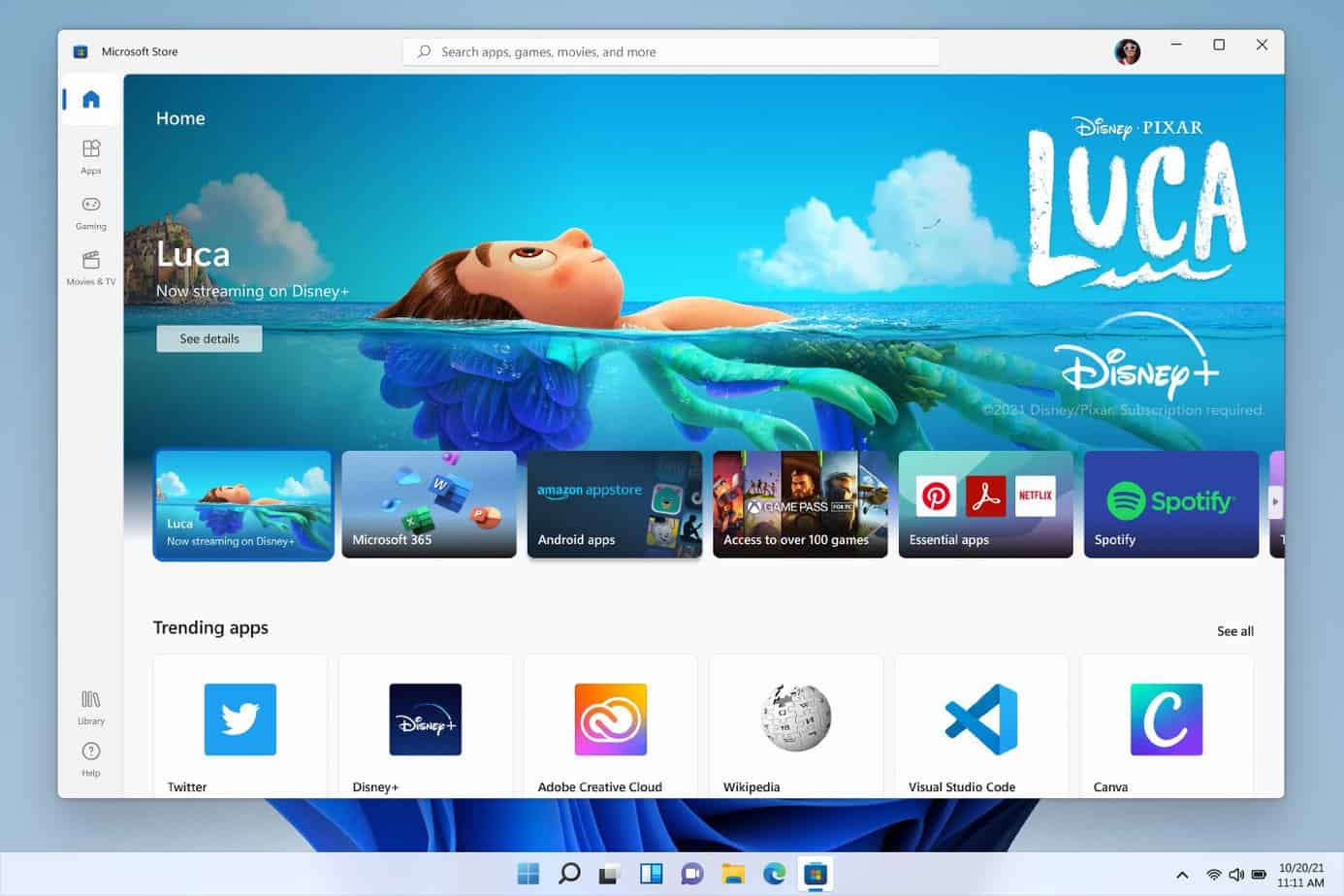
Windows 11 features a new version of the Microsoft Store, with a new interface and a broader selection of apps. This new store is meant to have an easier to use and better-curated digital storefront. It should also be faster, "We rebuilt for speed", said Panos Panay during the Windows 11 announcement. So far our experience of it is much the same as the rest of Windows 11... But it's also still mostly filled with apps you'd likely download direct from your browser, or wouldn't want to touch at all.

Windows 11 makes it easy to organize two or more application windows you want to use at the same time. This builds on the ability to snap windows on the left or right sides of the screen in Windows 10, as well as customizations to Android that showed up in the Surface Duo, Microsoft's two-screened smartphone. Hover over the maximize button in an application, and you'll see options for arranging two, three or even four windows. You click on which part of the screen you want that current window to use, and then you choose other portions of the screen for the other windows. After you've organized your windows the way you like them, you can go to the taskbar and quickly access your set of windows. If you open other ones, you can get back to the set by hovering over the icons for the apps included in the set.
You can also quickly close the set by hovering and hitting the X button. Most noticeably, a new design is meant to help users more quickly get what they're looking for. Microsoft is changing the rules of its app store to bring more variety and even bring Android apps to the PC, and adding enhancements that promise to boost gaming. New touchscreen controls and a better way to configure windows on screen might make it easy to sit in front of the computer for long periods. It's not imperative that you upgrade your system to Windows in the next couple of weeks, or even months.
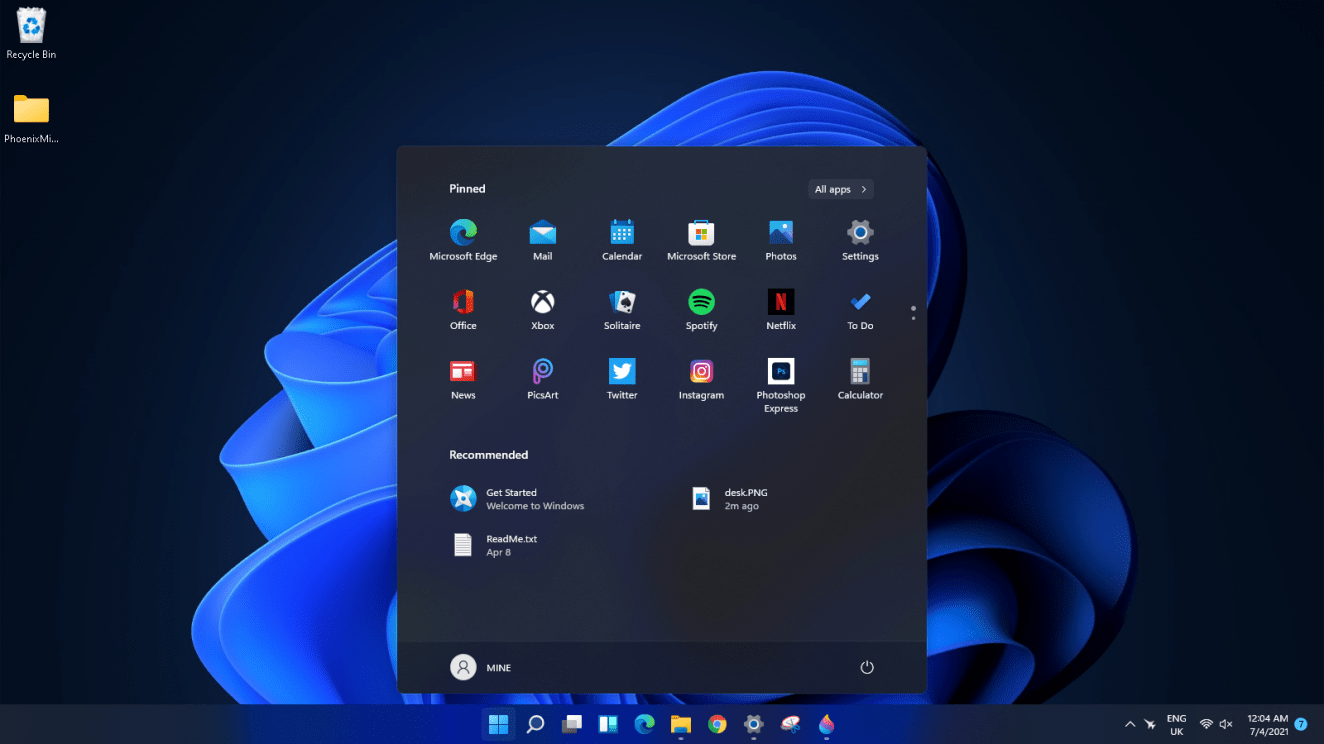
According to Microsoft's own lifecycle website, Windows 10 Home, Pro and Enterprise editions will continue to be supported by Microsoft until October 2025; your device will get essential security updates for another four years. For many people, that's about the time to upgrade to a newer device, one that will come with Windows 11 already installed. Pinned app buttons (they're larger than icons but smaller than Windows 10's tiles) are at the top of its panel.
The Start menu's new mini-tiles are still good for touch input, but you lose info that live tiles offer, annoying as those could sometimes be. Another quibble I have with the new Start menu is that it's harder to get to the All Apps view than in Windows 10. With that version of Windows, you can see all installed apps as soon as you open the Start menu; they're in a list on the left while tiles for your pinned apps are on the right.
Perhaps the most important thing to know about the release of Windows 11 is that we should expect it to change significantly over the next few years. I've been using beta versions of Windows 11 for a month in the lead-up to writing this review, and it seems like every few days there's a minor new feature or redesigned app to check out. We may not see that feature fully realized in Windows until next year.
If the Microsoft Surface family of products isn't your style though, other brands like Dell, Asus and HP have all released pages online that specify what devices are Windows 11 ready. Note that many won't come with the new operating system installed, but as they all meet the minimum system requirements, you can simply buy the laptop or 2-in-1 as normal and then update it yourself. Windows 11 SE was announced on November 9, 2021, as an edition exclusively for low-end devices sold in the education market, and a successor to Windows 10 S. It is bundled with applications such as Microsoft Office for Microsoft 365, Minecraft Education Edition, and Flipgrid, while OneDrive is used to save files by default. Windows 11 SE does not include Microsoft Store; third-party software is provisioned or installed by administrators. As part of the minimum system requirements, Windows 11 only runs on devices with a Trusted Platform Module 2.0 security coprocessor.
According to Microsoft, the TPM 2.0 coprocessor is a "critical building block" for protection against firmware and hardware attacks. In addition, Microsoft now requires devices with Windows 11 to include virtualization-based security , hypervisor-protected code integrity , and Secure Boot built-in and enabled by default. The operating system also features hardware-enforced stack protection for supported Intel and AMD processors for protection against zero-day exploits. The taskbar's buttons are center-aligned by default, and it is permanently pinned to the bottom edge of the screen; it cannot be moved to the top, left, or right edges of the screen as in previous versions of Windows.

The "Widgets" button on the taskbar displays a panel with Microsoft Start, a news aggregator with personalized stories and content (expanding upon the "news and interests" panel introduced in later builds of Windows 10). Microsoft Teams is similarly integrated with the taskbar, with a pop-up showing a list of recent conversations. Windows 11, the first major Windows release since 2015, builds upon its predecessor by revamping the user interface to follow Microsoft's new Fluent Design guidelines. The redesign, which focuses on ease of use and flexibility, comes alongside new productivity and social features and updates to security and accessibility, addressing some of the deficiencies of Windows 10. In January 2021, it was reported that a job listing referring to a "sweeping visual rejuvenation of Windows" had been posted by Microsoft.

A visual refresh for Windows, developed under the codename "Sun Valley", was reportedly set to re-design the system's user interface. Instead of the somewhat clunky tiling system found in the previous iteration of the iconic taskbar, Windows 11 peels away the cruft and gives you what you need. In my case, it's a list of recently accessed files along with a tray of pinned apps for easy access, with a universal search bar at the top for easy web (or on-device) searching. The clean lines and use of widgets to display information like weather, news, and photos is a welcome change of pace from the busy screen in Windows 10. In what is less surprising, the report also claims that users were also unaware of whether their computer was eligible to receive the update.

The report states that the survey found two-thirds of users surveyed were not aware of whether their PC could run Windows 11. If your PC is running Windows 10, then you can check to see if your device is eligible to upgrade using the PC Health Check app. This will basically check whether your PC meets the minimum system requirements required for Windows 11. You can then check to see if the Windows 11 upgrade is ready for your specific device by opening Windows Update settings.

Windows 11 will be provided as a free update to all eligible devices that are currently running Windows 10. Eligibility for automatic upgrade is based on certain minimum hardware requirements. If you haven't seen it through Windows Update yet, you can still get the final build through the Beta and Release Preview channels of the Windows Insider Program, as long as you have a compatible PC. The Dev channel is already running rs_prerelease builds to test out new features, so be careful with that.

If you enroll in the Dev channel, you'll have to do a clean installation of Windows 11 to roll back. And of course, you can also get it on a bunch of new laptops and desktops like the Surface Laptop Studio and Surface Pro 8. Windows Widgets are back in Windows 11, accessible via the dock, with Microsoft touting AI-powered dynamic features that enable widgets, as with the Start menu, to change depending on the apps you're using and the time of day. On the touchscreen, you can slide from the left on the desktop to have widgets appear. At least 16GB of RAM The basic system requirements of Windows 11 differ significantly from Windows 10. Windows 11 only supports 64-bit systems such as those using an x86-64 or ARM64 processor; IA-32 processors are no longer supported.
Thus, Windows 11 is the first ever consumer version of Windows not to support 32-bit processors and 16-bit software . The minimum RAM and storage requirements were also increased; Windows 11 now requires at least 4GB of RAM and 64GB of storage. The compatibility list includes the Intel Core i7-7820HQ, a seventh-generation processor used by the Surface Studio 2, although only on devices that shipped with DCH-based drivers. Citing security considerations, the system requirements for Windows 11 were increased over Windows 10. While the OS can be installed on unsupported processors, Microsoft does not guarantee the availability of updates. Windows 11 also drops support for 32-bit x86 CPUs and devices which use BIOS firmware.

Windows 11 is now officially available for download in India and around the world. The new Windows operating system has been released as a free upgrade on eligible Windows 10 PCs. It will also come preloaded on new Windows PCs from manufacturers such as Acer, Asus, Dell, HP, and Lenovo, among others. Windows 11 supports a variety of form factors such as convertibles and 2-in-1 devices alongside traditional desktops and laptops.
It also works with a range of silicon from companies including AMD and Intel. If you've been patiently waiting to install Windows 11 on your PC, Microsoft has good news. The company announced today it's increasing the pace of the operating system's rollout, and making it more broadly available. Provided your system is running version 2004 or later of Windows 10 and you recently installed the September 14th, 2021 servicing update Microsoft released, you can now upgrade directly to Windows 11. Windows 11 is the next major version of the Windows operating system that Microsoft plans to release this year.

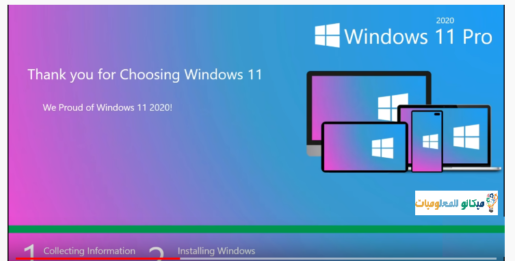
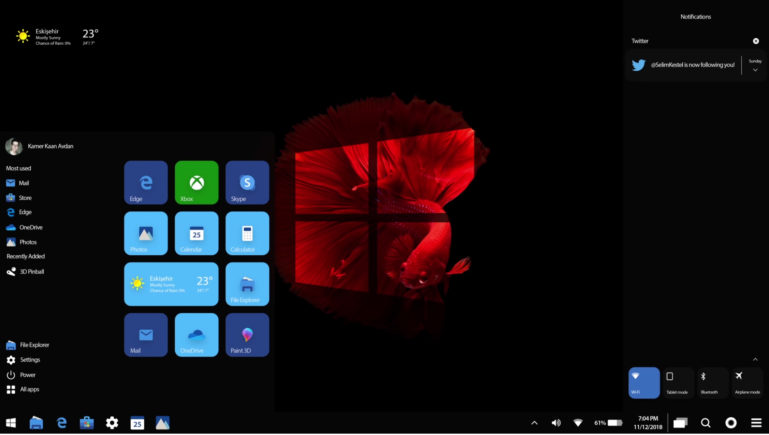
The launch of this OS marks exactly six years since the company last released a new version of windows. Microsoft has not released another version of Windows for quite some time because Windows 10 was a continuously updated operating system. Below are some screenshots of the interface, taken from Windows 11 Pro. You can see that there's a completely new center-focused taskbar with a newly designed Start menu, widgets menu, updated File Explorer and Control Panel icons, Microsoft Store, search tool, Settings, and a refreshed setup procedure.